Local Honey From St. Augustine
At Bee Augustine Honey Co., we proudly produce raw local honey harvested exclusively from our nine apiaries throughout St. Augustine, Florida. Every jar reflects the flowers, trees, and native plants surrounding the neighborhood where our honey bees forage, creating distinctive flavors that capture the character of Florida’s Historic Coast.
Unlike commercially blended honey, our honey begins and ends right here in St. Augustine. We never purchase honey from outside suppliers or mix imported honey into our products. Every harvest comes directly from our own managed colonies, allowing us to oversee every step of the process—from caring for healthy honey bee colonies to harvesting, bottling, and delivering fresh local honey to our customers.
Honey bees typically forage within a three- to five-mile radius of their hive. During those flights, they collect nectar from thousands of blooming flowers, native trees, ornamental landscapes, fruit trees, wildflowers, and seasonal plants unique to that area. Because every neighborhood offers a different combination of nectar sources, each harvest develops its own color, aroma, texture, and flavor profile. Honey produced just blocks from the Atlantic Ocean will naturally differ from honey harvested farther inland, making every one of our apiaries a true reflection of its local environment.
Today, Bee Augustine Honey Co. manages nine apiaries strategically located throughout St. Augustine, including Butler Beach, Davis Shores, Lewis Speedway, Anastasia Island, Crescent Beach, St. Augustine Shores, 206 East, 206 West, and our Nursery apiary located on US1 South. Rather than blending every harvest into a single product, we celebrate the unique character of each location, allowing customers to experience how geography, local vegetation, and seasonal blooms influence the taste of raw local honey.
Local Honey Starts With Healthy Honey Bees
Responsible beekeeping is at the heart of everything we do. Healthy honey bee colonies are essential pollinators for backyard gardens, citrus trees, native Florida plants, flowering landscapes, and agricultural crops throughout St. Johns County. By maintaining thriving apiaries across the region, we’re helping strengthen local ecosystems while producing authentic raw Florida honey that reflects the communities where it was created.
Every jar of Bee Augustine Honey Co. honey represents thousands of hours of work performed by millions of honey bees—and the dedication required to care for them throughout the year. From regular hive inspections and sustainable colony management to careful harvesting and bottling, we’re committed to producing honey that is as authentic as the place it comes from.
When you enjoy Bee Augustine Honey Co. honey, you’re tasting more than raw local honey. You’re tasting the flowers, seasons, neighborhoods, and landscapes that make St. Augustine one of the most unique places in Florida—one apiary, one harvest, and one spoonful at a time.
Our Apiaries
- 1St. Augustine Shores
The St. Augustine Shores Apiary holds a special place in our story as the very first apiary established by Bee Augustine Honey Co. What began with a passion for beekeeping and producing authentic raw local honey has grown into a network of nine apiaries throughout St. Augustine, but it all started here. Located just west of the Intracoastal Waterway in the heart of St. Augustine Shores, this apiary is surrounded by mature oak trees, native Florida plants, ornamental landscapes, backyard gardens, nearby marshes, and natural preserves. The close proximity to the Intracoastal Waterway creates a diverse coastal ecosystem where our honey bees forage across a rich variety of flowering trees, shrubs, and seasonal blooms within a three- to five-mile radius of the hive. Like every Bee Augustine Honey Co. apiary, we harvest and bottle the honey from our St. Augustine Shores colonies separately rather than blending it with honey from our other locations. Each jar is a true single-apiary honey, preserving the unique characteristics of this original apiary and offering an authentic taste of the place where Bee Augustine Honey Co. first began.
- 2Anastasia Island
Located on beautiful Anastasia Island in St. Augustine, Florida, our Island Apiaries are surrounded by a diverse mix of coastal vegetation, native Florida plants, flowering trees, neighborhood gardens, and seasonal blooms. Just minutes from the St. Augustine Beach Pier, this unique environment provides our honey bees with an ever-changing variety of nectar sources throughout the year. Like all of our apiaries, we keep the honey harvested from our Anastasia Island colonies separate rather than blending it with honey from our other locations. This allows every jar to preserve the unique characteristics of the island's landscape, giving you an authentic taste of one of St. Augustine's most iconic coastal communities.
- 3The Nursery
Our Nursery Apiary is located along US 1 South in St. Augustine, Florida, where our honey bees forage among a diverse collection of ornamental plants, flowering trees, shrubs, and native Florida vegetation. The ever-changing variety of blooms found throughout the nursery and surrounding landscape provides a rich and continuous source of nectar, resulting in raw local honey with a distinctive seasonal character. Every jar from our Nursery Apiary is a true single-apiary honey—harvested exclusively from our own managed colonies and bottled right here in St. Augustine. It's another example of our commitment to producing authentic raw local honey that showcases the unique environments found throughout our community.
- 4Crescent Beach
Our Beach Apiary is located just steps from the Atlantic Ocean, directly across from Fort Matanzas National Monument in St. Augustine, Florida. In this unique coastal environment, our honey bees forage among native dune vegetation, seaside wildflowers, flowering shrubs, and the diverse plants that thrive along Florida's Historic Coast. The combination of salt air, coastal ecosystems, and seasonal blooms creates a distinctive nectar source that produces raw local honey with a flavor profile unique to this remarkable location. Every harvest from our Beach Apiary captures the character of Florida's coastline, offering a true taste of one of the most beautiful and historic areas in St. Augustine.
- 5206 East
Our 206 East Apiary is located along State Road 206 between the Intracoastal Waterway and US 1 in St. Augustine, Florida. Surrounded by approximately 14 acres of wild blueberries, blackberries, and native gallberry, this location provides exceptional nectar and pollen sources throughout the season.
- 6206 West
Nestled on 75 breathtaking acres of beautifully maintained gardens and flourishing fruit trees, this incredible property offers our honey bees an abundance of diverse nectar and pollen sources throughout the season. From blooming ornamental gardens to fruit trees bursting with blossoms, it's the perfect environment for healthy colonies to thrive and produce exceptional local honey from St. Augustine.
- 7Butler Beach
Just a few blocks from the Atlantic Ocean, our Butler Beach Apiary is where coastal breezes meet hardworking honey bees. Surrounded by Florida's native coastal vegetation, flowering landscapes, and the unique ecosystem that makes Butler Beach so special, this apiary gives our honey bees a one-of-a-kind place to forage. The result is a honey harvest that reflects the character of Florida's First Coast—local, seasonal, and unmistakably St. Augustine.
- 8Davis Shores
Our Davis Shores Apiary is perfectly positioned between Florida's beautiful coastal landscapes and the oldest city's lush gardens, flowering trees, and historic neighborhoods. Every day, our honey bees cross a landscape rich in blooms, gathering nectar from the plants that make this corner of St. Augustine so unique. From sunrise over the Matanzas River to the charm of historic downtown just beyond the Bridge of Lions, this apiary captures the spirit of the Ancient City in every harvest.
- 9Lewis Speedway
North of historic St. Augustine, just across from the St. Augustine Airport, sits one of the most unique locations in our apiary network— our Lewis Speedway Apiary. Long before it became a quiet gateway to the city, this area was home to the legendary Lewis Speedway, where generations of racing fans gathered to watch the thunder of stock cars and the excitement of Saturday night competition. That rich history is still part of the character of this special place. Today, the roar of race engines has given way to the gentle hum of our honey bees. Our colonies forage across a diverse landscape filled with native Florida wildflowers, ornamental plantings, and seasonal blooms, transforming the area's natural beauty into pure, local honey from St. Augustine. We love that this apiary honors both the past and the future—preserving a piece of St. Augustine's history while supporting the pollinators that help our community flourish.
St. Augustine Apiary Tours
Experience St. Augustine Apiary Tours
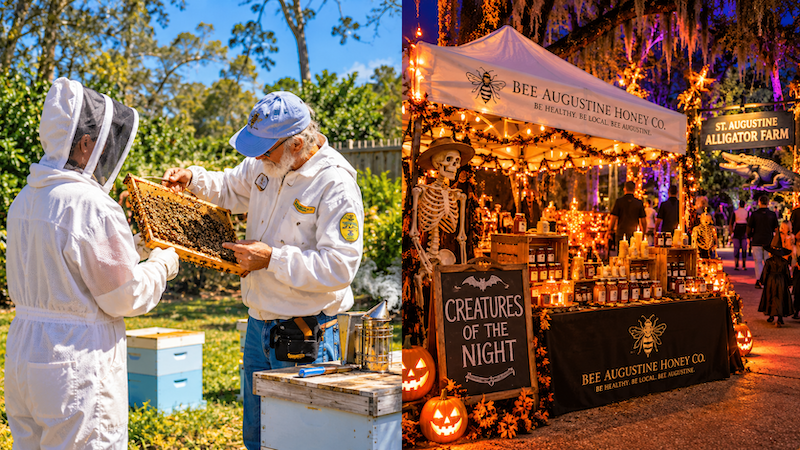
Ever wondered what it’s like inside an active honey bee colony? Join Bee Augustine Honey Co. for an unforgettable behind-the-scenes experience where you’ll suit up, meet thousands of honey bees, participate in a live hive inspection, learn how raw local honey is produced, and discover why honey bees are one of nature’s most fascinating pollinators.
Whether you’re a local resident, visiting historic St. Augustine, or simply curious about beekeeping, our St. Augustine apiary tours offer an educational, hands-on experience you’ll never forget.
Frequently Asked Questions
- What is single-apiary honey?
Single-apiary honey is honey harvested from one specific apiary rather than blended with honey from multiple locations. At Bee Augustine Honey Co., we bottle each apiary's harvest separately so you can experience the unique flavor created by the flowers, trees, and native plants surrounding that location. It's similar to the way single-origin coffee or single-vineyard wine reflects the place where it was produced.
- Is your honey raw?
Yes. Every jar of Bee Augustine Honey Co. honey is raw, minimally filtered, and harvested directly from our own honey bee colonies in St. Augustine, Florida. We never heat our honey or blend it with honey from outside suppliers, allowing it to retain its natural flavor, aroma, and character.
- Where does your honey come from?
All of our honey is harvested exclusively from our own managed apiaries located throughout St. Augustine. We currently manage nine apiaries, each producing honey with its own unique flavor based on the flowers, trees, and native plants surrounding that location.
- Why does each apiary produce different honey?
Honey bees typically forage within a three- to five-mile radius of their hive. Because every neighborhood contains different flowers, trees, gardens, and seasonal blooms, each apiary produces honey with its own distinctive color, aroma, and flavor profile.
- Is your honey produced in St. Augustine?
Yes. Every jar of Bee Augustine Honey Co. honey is produced right here in St. Augustine, Florida. From caring for our honey bees to harvesting, bottling, and labeling, every step takes place locally.
- How many apiaries do you have?
Bee Augustine Honey Co. currently manages nine apiaries strategically located throughout St. Augustine. Each apiary contributes its own distinctive seasonal harvest, allowing customers to experience the incredible diversity of local honey produced across our community.
- Why should I buy local honey?
Local honey reflects the unique flowers and plants found in your community and supports local beekeepers who care for healthy honey bee colonies. Purchasing local honey also helps strengthen pollination throughout St. Johns County while supporting a small local business.
- Where can I buy Bee Augustine Honey Co. honey?
Visit us at our original St. Augustine Shores Apiary, located at 918 Viscaya Blvd., St. Augustine, Florida 32086, where you can purchase raw local honey harvested from our nine apiaries throughout St. Augustine. Because we keep each apiary's honey separate rather than blending harvests together, you'll have the opportunity to compare the unique flavors, colors, and aromas created by different flowers, neighborhoods, and seasons. Every jar is harvested from our own honey bee colonies and bottled locally, giving you an authentic taste of St. Augustine—one apiary at a time.
- Can I visit your apiaries?
Yes! We offer guided St. Augustine apiary tours where guests can suit up, observe active honey bee colonies, learn about sustainable beekeeping, and discover how raw local honey is produced. Reservations are required.
Follow the Bees
We regularly share what’s happening across our nine St. Augustine apiaries—from live hive inspections and honey harvests to bee removals, new honey releases, and behind-the-scenes moments with our honey bees.
Follow Bee Augustine Honey Co. and experience the fascinating world of beekeeping as it happens.